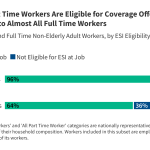
This brief examines key characteristics of part-time workers and their access to coverage. Part-time workers are much less likely than full time ones to be offered health benefits by their employer or to have health coverage at all.
Part-Time Workers Have Less Access to Employer-Based Coverage Than Full-Time Workers
Related Post
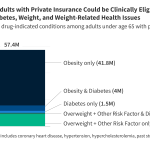
How Many Adults with Private Health Insurance Could Use GLP-1 Drugs
More than two in five (42%) or 57.4 million adults under 65 with private insurance could be eligible under clinical ...
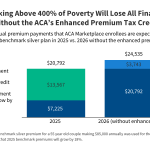
Premium Payments if Enhanced Premium Tax Credits Expire
This data note examines how the expiration of the ACA’s enhanced premium tax credits could affect the out-of-pocket portion of ...
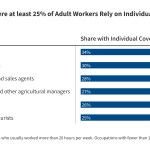
Occupations with Large Shares of Workers Who Rely on Individual Market Coverage
This analysis examines the share of adult workers in occupations that rely more heavily on individual market coverage for health ...
2024 Employer Health Benefits Chart Pack
This slideshow captures key data from the 2024 KFF Employer Health Benefits Survey survey, providing a detailed look at trends ...

Employer-Sponsored Coverage Rates for People Ages 0-64 by Federal Poverty Level (FPL)
...
How Does the Department of Health and Human Services (HHS) Impact Health and Health Care?
This policy watch provides a short overview of the Department of Health and Human Services (HHS), describing its history, budget, ...
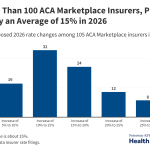
Individual Market Insurers Requesting Largest Premium Increases in More Than 5 Years
This analysis of preliminary rate filings submitted by 105 ACA Marketplace insurers in 19 states and DC shows that ACA ...
Distribution of People Ages 0-64 with Employer Coverage by Federal Poverty Level (FPL)
...
Employer Health Benefits Annual Survey Archives
KFF has conducted this annual survey since 1999. ...

How Might Expiring Premium Tax Credits Impact People with HIV?
This issue brief provides an overview of the potential impact not extending enhanced ACA premium tax credits could have on ...